
How to Calculate Cheese Yield from Milk: The Complete Guide for Cheesemakers
Understanding how to calculate cheese yield from milk is essential for every cheesemaker, whether you’re running a small artisan operation or managing a large-scale dairy facility. Cheese yield directly impacts your profitability, production planning, and overall business success. In this comprehensive guide, we’ll walk you through the formulas, factors, and practical strategies to accurately predict and optimize your cheese production.
What Is Cheese Yield and Why Does It Matter?
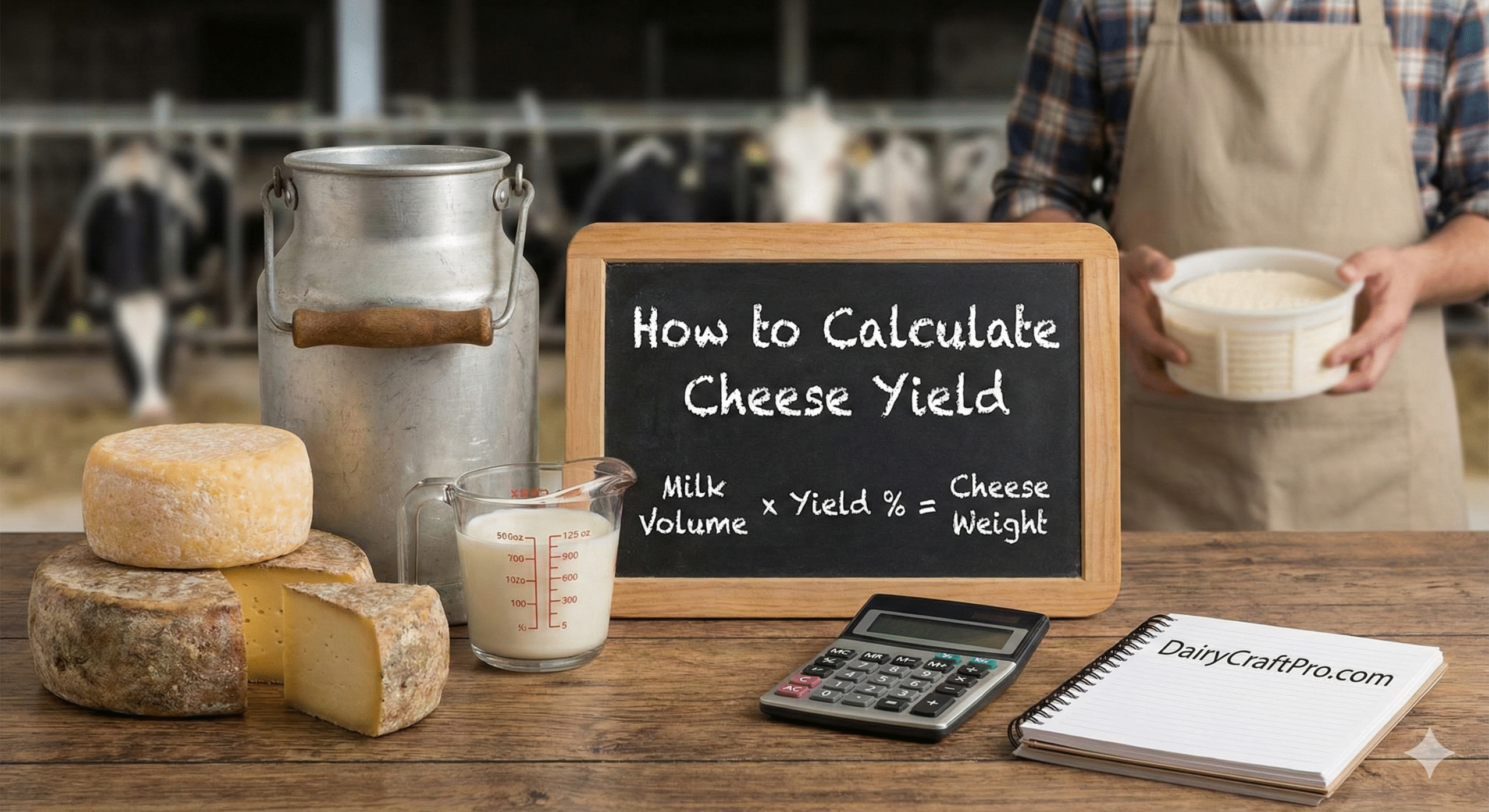
Cheese yield refers to the amount of cheese produced from a given quantity of milk. It’s typically expressed as a percentage or as kilograms of cheese per 100 kilograms of milk. For example, if you produce 10 kg of cheese from 100 kg of milk, your cheese yield is 10%.
Knowing how to calculate cheese yield from milk helps you:
- Estimate production costs and set profitable pricing
- Plan raw material requirements accurately
- Identify inefficiencies in your cheesemaking process
- Compare performance across different batches and milk sources
- Make informed decisions about milk purchasing
The Basic Cheese Yield Formula
The simplest way to calculate cheese yield from milk is using this straightforward formula:
Cheese Yield (%) = (Weight of Cheese ÷ Weight of Milk) × 100
For example, if you start with 500 kg of milk and produce 55 kg of cheese:
Cheese Yield = (55 ÷ 500) × 100 = 11%
While this basic calculation tells you what actually happened, it doesn’t help you predict future yields or understand why your yield varies. That’s where more advanced formulas come in.
The Van Slyke Formula: The Industry Standard
The Van Slyke formula is the most widely used method to calculate theoretical cheese yield. Developed in the early 1900s, this formula has stood the test of time because it accounts for the two main components that end up in cheese: fat and casein protein.
Van Slyke Formula:
Yield = [(0.93 × Fat%) + (Casein% – 0.1)] × 1.09 ÷ (100 – Moisture%)
Let’s break down each component:
- 0.93: Recovery coefficient for fat (about 93% of milk fat transfers to cheese)
- Fat%: The fat percentage of your milk
- Casein%: The casein protein percentage (typically calculated as Total Protein × 0.78)
- 0.1: Adjustment for casein lost in whey
- 1.09: Factor accounting for other solids (minerals, lactose) retained in cheese
- Moisture%: Target moisture content of the finished cheese
Practical Example Using Van Slyke
Let’s calculate the expected yield for Cheddar cheese using milk with 3.8% fat and 3.2% protein:
- Calculate casein: 3.2% × 0.78 = 2.50%
- Apply the formula (targeting 37% moisture for Cheddar):
Yield = [(0.93 × 3.8) + (2.50 – 0.1)] × 1.09 ÷ (100 – 37)
Yield = [3.53 + 2.40] × 1.09 ÷ 63
Yield = 5.93 × 1.09 ÷ 63
Yield = 6.46 ÷ 63
Yield = 10.25%
This means you can expect approximately 10.25 kg of Cheddar cheese from every 100 kg of this milk.
Modified Yield Formulas for Different Cheese Types
Different cheese varieties have different yield characteristics. Here are some adapted approaches:
For Soft Cheeses (Higher Moisture)
Soft cheeses like Brie, Camembert, and fresh cheeses have higher moisture content, which increases yield. A modified formula adjusts for moisture levels above 50%:
Soft Cheese Yield = [(0.85 × Fat%) + (Casein% × 0.95)] × 1.12 ÷ (100 – Moisture%)
For Hard Aged Cheeses
Hard cheeses like Parmesan and aged Gouda lose moisture during aging, reducing final yield:
Aged Cheese Yield = Fresh Yield × (100 – Aging Moisture Loss%) ÷ 100
For a cheese that loses 15% moisture during 12 months of aging:
Final Yield = 10.25% × (100 – 15) ÷ 100 = 8.71%
Key Factors Affecting Cheese Yield
Several variables influence how much cheese you’ll actually get from your milk:
Milk Composition
The composition of your milk is the primary determinant of cheese yield. Higher fat and protein content generally means higher yield. Milk composition varies based on:
- Breed of cattle (Jersey cows produce richer milk than Holsteins)
- Stage of lactation
- Season and weather conditions
- Animal nutrition and feed quality
- Herd health and somatic cell count
Processing Parameters
Your cheesemaking process significantly impacts yield:
- Pasteurization: High-temperature treatments can denature proteins, slightly reducing yield
- Calcium chloride addition: Can improve curd firmness and fat retention
- Cutting size: Smaller curd cuts release more fat and moisture into whey
- Cooking temperature: Higher temperatures expel more moisture
- Pressing pressure: Affects final moisture content
Starter Culture and Coagulation
The acidification and coagulation process plays a crucial role:
- pH at cutting: Optimal pH ensures maximum protein retention
- Rennet strength and dosage: Affects curd formation and whey expulsion
- Coagulation time: Proper timing prevents fat losses
Fat Recovery
Not all milk fat ends up in the cheese. Typical fat recovery rates are:
- Excellent: 93-95%
- Good: 90-93%
- Acceptable: 87-90%
- Poor: Below 87%
Monitor your whey fat content to assess fat recovery efficiency.
How to Improve Your Cheese Yield
Now that you know how to calculate cheese yield from milk, here are practical strategies to maximize it:
Optimize Milk Quality
Work with your milk suppliers or manage your herd to achieve:
- Higher protein content (aim for 3.3%+ total protein)
- Optimal fat-to-protein ratio (typically 1.1:1 to 1.2:1)
- Low somatic cell count (under 200,000 cells/mL)
- Minimal bacterial contamination
Standardize Your Milk
Standardizing milk to consistent fat and protein levels helps achieve predictable yields. Many cheesemakers target specific fat-to-casein ratios for their cheese type.
Fine-Tune Processing Parameters
Small adjustments can significantly impact yield:
- Ensure proper curd firmness before cutting
- Use appropriate curd knife size for your cheese type
- Monitor and control cooking temperatures precisely
- Optimize pressing schedules
Reduce Losses
Track where you’re losing product:
- Measure fat content in whey
- Weigh curd at multiple stages
- Account for trimming and handling losses
- Monitor aging losses for aged varieties
Using Technology to Track Cheese Yield
Modern dairy operations benefit from digital tools that track yield in real-time. Production management software can help you:
- Record milk composition for every batch
- Calculate theoretical yields automatically
- Compare actual vs. predicted performance
- Identify trends and anomalies
- Generate reports for continuous improvement
Implementing a robust tracking system transforms yield calculation from a periodic exercise into a continuous improvement process.
Cheese Yield Benchmarks by Type
Here are typical yield ranges for common cheese varieties to help you benchmark your results:
Cheese TypeTypical Yield Range

Fresh/Queso Fresco 12-15%
Mozzarella 10-12%
Cheddar 9.5-10.5%
Gouda 9-10%
Swiss/Emmental 8.5-9.5%
Parmesan (fresh) 7.5-8.5%
Parmesan (aged) 6-7%
Your actual results will depend on milk composition, process efficiency, and target specifications.
Common Mistakes When Calculating Cheese Yield
Avoid these frequent errors:
Inconsistent weighing: Always weigh cheese at the same moisture level and temperature for accurate comparisons.
Ignoring moisture variations: A cheese that appears to have higher yield might simply contain more water. Always account for moisture content.
Not accounting for aging losses: For aged cheeses, track both fresh yield and final yield after aging.
Using inaccurate milk analysis: Invest in reliable testing equipment or laboratory services for precise milk composition data.
Comparing different cheese types: Only compare yields within the same cheese category and moisture specification.
Conclusion
Learning how to calculate cheese yield from milk is fundamental to running a profitable and efficient cheesemaking operation. By understanding the Van Slyke formula and the factors that influence yield, you can make data-driven decisions that improve your bottom line.
Start by establishing baseline measurements for your current production, then systematically work to optimize milk quality, processing parameters, and loss reduction. With consistent tracking and continuous improvement, you can maximize the value you extract from every kilogram of milk.
Remember that cheese yield is just one metric of success. Quality, consistency, and customer satisfaction should always remain your primary goals. A slightly lower yield with superior cheese is often more valuable than maximizing output at the expense of quality.