
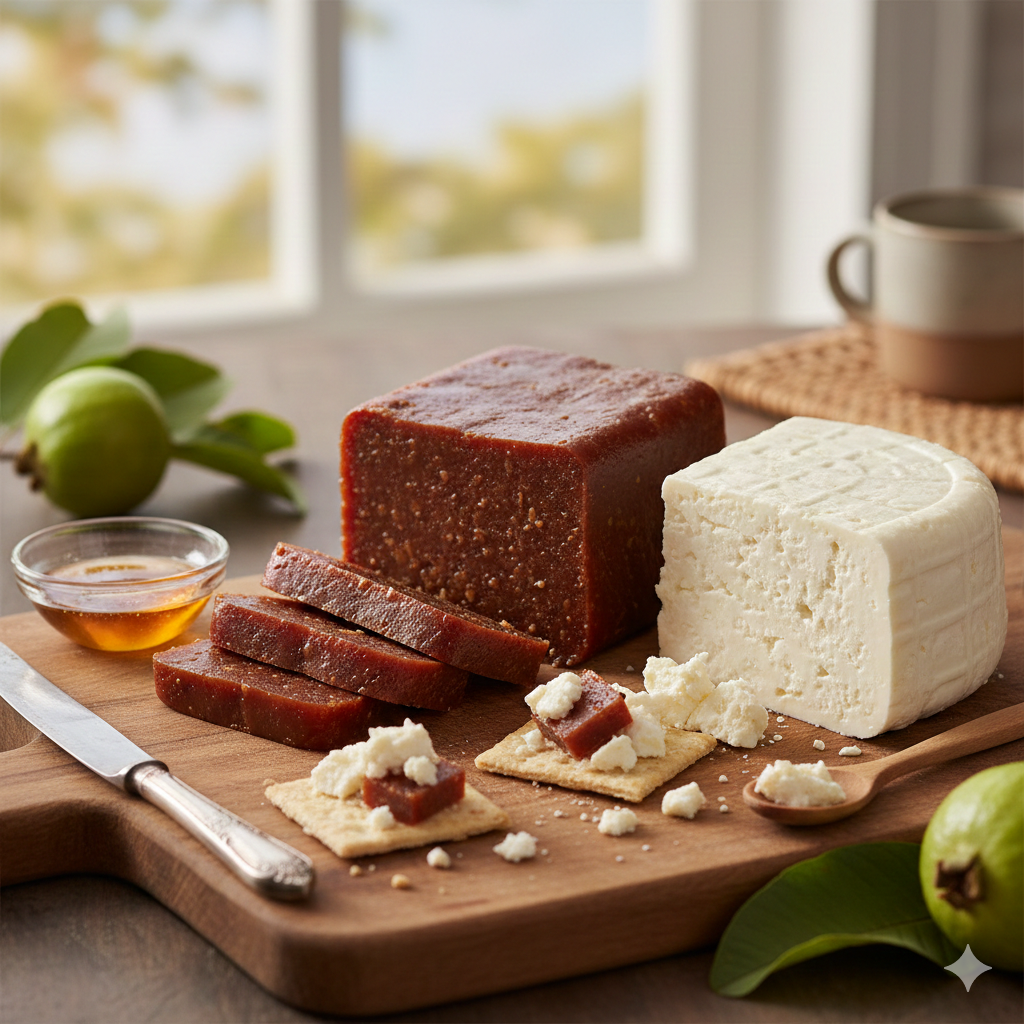
Despite its name, guava cheese contains no dairy at all. This sweet, fudgy confection made from guava fruit and sugar has captivated taste buds across Latin America, the Caribbean, and beyond for centuries. For dairy producers and cheese makers, understanding guava cheese opens up exciting opportunities for creating irresistible sweet-and-savory pairings that customers love.
In this comprehensive guide, we explore the fascinating world of guava cheese, its cultural significance, and most importantly for dairy professionals, the perfect cheese pairings that have made combinations like Brazil’s famous “Romeu e Julieta” beloved around the world.
What Is Guava Cheese?
Guava cheese, also known as goiabada in Portuguese, perad in Goa, and pasta de guayaba in Spanish, is a thick, dense fruit paste made from guava pulp and sugar. The confection has a consistency similar to firm fruit butter or soft candy, making it easy to slice into pieces.
The name “cheese” comes from the final product’s appearance and texture, which resembles a firm cheese that can be sliced and served in similar ways. This naming convention follows the tradition of “quince cheese” (membrillo) and other fruit pastes that have been made throughout Europe and the Americas for centuries.
Key Characteristics of Guava Cheese
The confection presents several distinctive qualities that make it unique among fruit preserves. Its deep pink to reddish-brown color comes from the natural pigments in ripe guavas, particularly red-fleshed varieties. The texture is firm enough to slice cleanly yet soft enough to yield pleasantly when bitten. The flavor profile balances the guava’s natural tropical sweetness with a subtle tartness that comes from the fruit’s inherent acidity.
The History and Cultural Significance
Guava cheese traces its origins to colonial Brazil, where Portuguese settlers sought alternatives to the quince paste they knew from home. Guavas, abundant in tropical Brazil, proved to be an excellent substitute. The production process required significant quantities of sugar and labor, as large batches were cooked slowly in copper cauldrons over low fires.
Regional Variations Around the World
Different cultures have developed their own versions of this sweet confection. In Brazil, goiabada remains deeply connected to the cuisine of Minas Gerais, where it pairs naturally with the region’s famous fresh cheeses. The combination became so iconic that it earned the romantic name “Romeu e Julieta” in the 1960s, inspired by Shakespeare’s star-crossed lovers.
In Goa, India, a former Portuguese colony, the confection is called perad and appears prominently during Christmas celebrations. Goan families have passed down recipes through generations, often adding lime juice and butter to create a glossy finish on the final product.
Throughout the Caribbean, from Cuba to Puerto Rico to Trinidad, guava cheese features in holiday traditions and everyday snacks alike. West Indian versions sometimes include lime juice and achieve a particularly chewy, fudgy texture that locals treasure.
In Colombia, a similar product called bocadillo often contains even more sugar than its Brazilian counterpart and sometimes features a caramel coating.
How Guava Cheese Is Made
The traditional production process requires patience and careful attention to achieve the proper consistency. Understanding this process helps dairy professionals appreciate the product they might pair with their cheeses.
The Basic Process
Production begins with selecting ripe guavas, though some traditional recipes successfully use slightly unripe fruit that has been softened through cooking. The fruit is washed, cut into pieces, and cooked until completely soft, often using a pressure cooker to speed the process.
Once softened, the guava is pureed and strained to remove seeds, creating a smooth pulp. This straining step is critical, as seeds would create an unpleasant texture in the finished product. Some producers strain the pulp twice to achieve maximum smoothness.
The strained pulp is measured, and an equal weight of sugar is typically added. This 1:1 ratio of fruit to sugar ensures proper preservation and the characteristic firm texture. Some modern recipes reduce the sugar slightly, though this affects both texture and shelf life.
The mixture cooks over medium heat with constant stirring, a process that can take 30 to 45 minutes or longer depending on batch size. The paste is ready when it begins to pull away from the sides of the pan and holds its shape. A traditional test involves dropping a small amount into cold water to check for proper firmness.
Finally, the hot paste is poured into greased molds and allowed to set completely, often overnight. Once firm, it can be cut into pieces, sometimes rolled in sugar for an attractive presentation.
The Perfect Cheese Pairings: A Dairy Producer’s Opportunity
Here lies the exciting opportunity for cheese and dairy producers. The sweet, tropical flavor of guava cheese creates perfect harmony with the mild, creamy, or slightly salty characteristics of many fresh cheeses.
Why the Combination Works
The pairing succeeds because of fundamental principles of flavor balance. Guava cheese brings sweetness, fruity acidity, and tropical aromatics. Fresh white cheeses contribute creaminess, mild saltiness, and a cooling effect that tempers the sweetness. Together, they create a complete sensory experience that neither component achieves alone.
This sweet-savory combination follows the same principles that make other classic pairings successful, from Parmesan with honey to brie with fruit preserves. The difference lies in the tropical character of guava, which brings an exotic element that distinguishes these pairings from European counterparts.
Best Cheese Varieties for Guava Pairing
Queso Blanco stands as perhaps the most popular pairing choice. This mild white cheese has enough firmness to slice alongside the guava cheese while offering a creamy texture that melts slightly when warmed. Its subtle saltiness creates beautiful contrast with the sweetness.
Queso Fresco offers a slightly more crumbly texture and a fresh, milky flavor that complements guava beautifully. This cheese works especially well when both components are cut into small cubes and served on toothpicks as appetizers.
Cream Cheese has become increasingly popular in Cuban and Puerto Rican pastries, where its ultra-creamy texture creates a luxurious contrast with the firm guava paste. The combination fills pastelitos and empanadas across Latin America.
Mozzarella, whether fresh or low-moisture varieties, provides a mild canvas that allows the guava flavor to shine. Fresh mozzarella works particularly well in appetizer presentations.
Queijo Minas is the traditional Brazilian choice for Romeu e Julieta. This soft, slightly salty fresh cheese from Minas Gerais has a mild flavor and creamy texture that Brazilians consider the authentic pairing.
Cheddar, particularly sharp varieties, creates an intriguing combination where the cheese’s stronger flavor stands up to the guava’s sweetness. Some find this bold pairing especially satisfying.
Brie and other soft-ripened cheeses offer a sophisticated take on the classic pairing, with the creamy interior and earthy rind adding complexity to the tropical fruit notes.
Applications for Dairy Businesses
Understanding guava cheese opens several business opportunities for cheese producers and dairy operations.
Product Bundling
Consider offering guava paste alongside your fresh cheeses as a ready-made pairing. Customers appreciate the convenience of a complete appetizer or dessert solution. Package sliced queso blanco with guava paste and crackers for an easy entertaining option.
Educational Marketing
Use the story of Romeu e Julieta and the cultural traditions surrounding guava and cheese pairings to create engaging content for your customers. Recipe cards featuring your cheeses with guava paste can drive sales of both products.
Event and Catering Opportunities
The striking presentation of guava and cheese appetizers makes them popular for events. Skewered cubes of cheese and guava paste, garnished with fresh basil or mint, create elegant passed hors d’oeuvres that showcase your products.
Menu Development
If your dairy operation includes a tasting room or retail space, consider offering guava and cheese platters. The combination introduces customers to new ways of enjoying your products while creating memorable tasting experiences.
Serving Suggestions and Presentations
The simplest presentation involves slicing both the guava cheese and the dairy cheese into equal-sized pieces and arranging them together on a plate. For more elegant presentations, cube both components and thread them onto small skewers with fresh herbs.
Warming the combination slightly brings out the flavors beautifully. A brief stint in the oven or microwave softens the cheese and makes the guava paste more jammy, creating a more integrated flavor experience.
The pairing works throughout the day. Serve it at breakfast with toast and coffee, as an afternoon snack, as an appetizer before dinner, or as a simple dessert after a meal. This versatility makes it appealing for various foodservice applications.
Incorporating Guava Cheese in Pastries
Cuban pastelitos and similar pastries represent perhaps the most famous prepared application of the guava and cheese combination. Flaky puff pastry envelopes the filling, and the pastries emerge from the oven golden and irresistible.
Empanadas filled with guava and cheese appear throughout Latin America, from Puerto Rico to Panama to Colombia. Some versions use wheat flour dough while others feature corn-based wrappers.
Cheesecakes, tarts, and other desserts can incorporate the Romeu e Julieta flavor profile, swirling guava paste into cream cheese fillings or using it as a topping or glaze.
Quality Considerations
When sourcing guava paste to pair with your cheeses, look for products made with real guava fruit rather than artificial flavors. Check ingredient lists for unnecessary additives or artificial colors, as quality guava paste achieves its characteristic color naturally.
Store guava paste at room temperature in its original packaging before opening. Once opened, it keeps well for several weeks at room temperature in an airtight container, or longer when refrigerated.
For the best pairing experience, both the guava paste and fresh cheese should be at similar temperatures. Cheese served too cold will not release its full flavor, while guava paste that has been refrigerated may be too firm to enjoy optimally.
Conclusion
Guava cheese represents a fascinating intersection of culinary traditions that offers real opportunities for dairy producers and cheese makers. Understanding this sweet confection and its natural affinity for fresh dairy cheeses enables you to create compelling products, marketing stories, and customer experiences.
Whether you produce queso blanco, cream cheese, mozzarella, or specialty fresh cheeses, the guava pairing provides a proven flavor combination that customers love. The rich cultural history behind combinations like Romeu e Julieta adds depth to your marketing while the simple, elegant presentation appeals to both everyday eating and special occasions.
Consider how this tropical-meets-dairy combination might enhance your product offerings, and explore the possibilities that guava cheese brings to your dairy business.
Looking for tools to streamline your cheese production? DairyCraftPro offers comprehensive software for production tracking, batch cost calculations, and yield monitoring designed specifically for artisan cheese makers and dairy producers.
Frequently Asked Questions
Does guava cheese contain actual cheese? No, guava cheese is a fruit confection made entirely from guava and sugar. The name refers to its firm, sliceable texture similar to some cheeses.
What is the best cheese to pair with guava paste? Mild, fresh white cheeses like queso blanco, queso fresco, and cream cheese are traditional choices. Mozzarella and sharp cheddar also create excellent pairings.
How long does guava paste last? Unopened guava paste is shelf-stable and lasts for months. Once opened, store it in an airtight container at room temperature for several weeks or refrigerate for longer storage.
What is Romeu e Julieta? Romeu e Julieta (Romeo and Juliet) is a traditional Brazilian dessert that pairs goiabada (guava paste) with fresh Minas cheese. The romantic name symbolizes the perfect union of two contrasting flavors.
Can I make guava paste at home? Yes, though the process requires patience. Cook guava pulp with an equal weight of sugar, stirring constantly until thick enough to hold its shape, then pour into molds to set.