
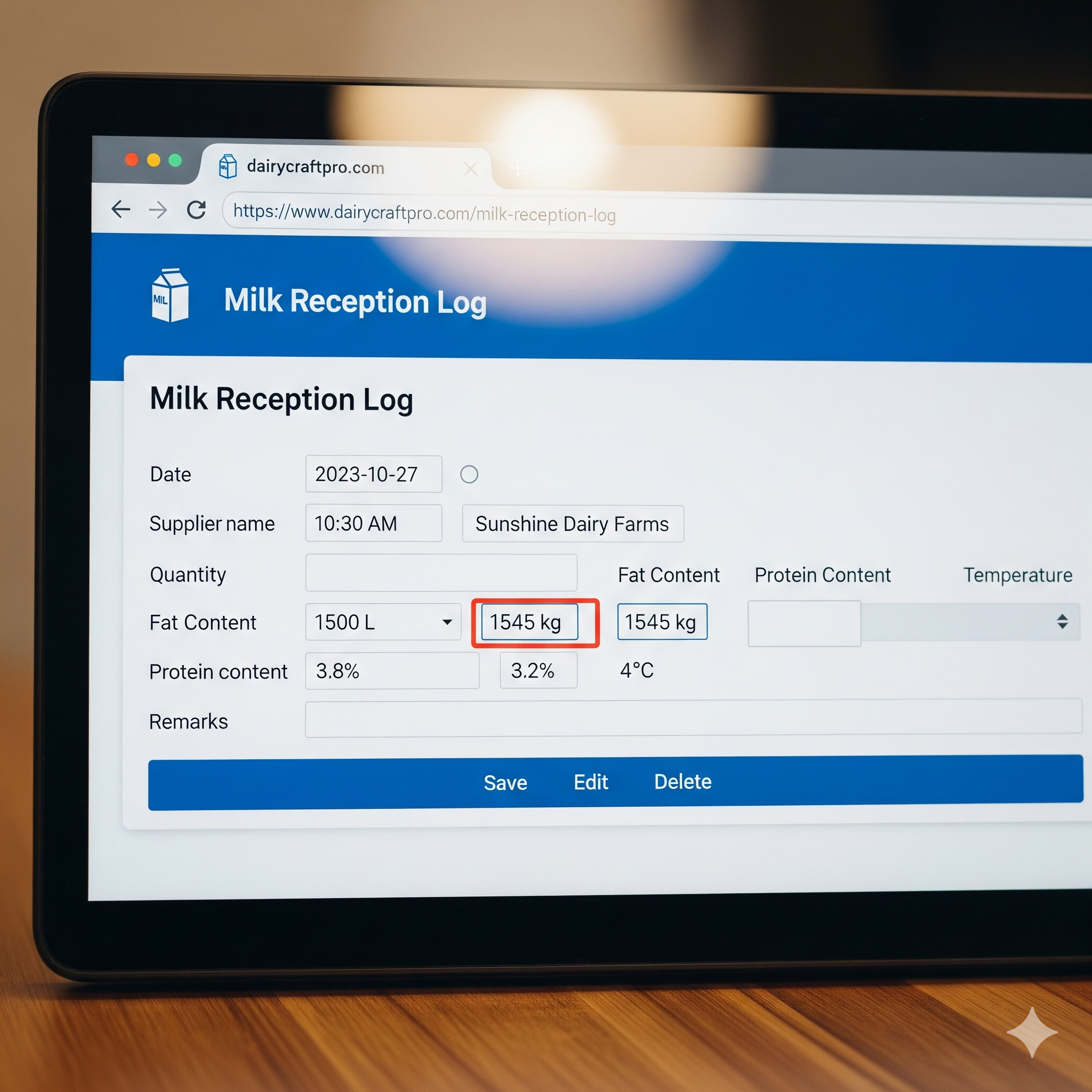
A reliable milk reception log is the first line of defense in dairy production. Every delivery that arrives at your facility carries data that shapes the quality, safety, and profitability of your final product — from fat and protein percentages to bacterial counts and antibiotic screening results. Miss something at reception, and you risk contaminating an entire production batch, failing a compliance audit, or producing cheese and yogurt that falls short of your standards.
DairyCraftPro’s milk reception log was built specifically for cheese and yogurt producers who need to capture, verify, and act on incoming milk data without slowing down their receiving workflow. In this post, we will walk through exactly how the reception module works, what data it captures, and why automating this step is a game changer for HACCP compliance and supplier management.
Why a Digital Milk Reception Log Matters
Many dairy producers still rely on paper logs, clipboards, or disconnected spreadsheets to record incoming deliveries. These methods create three persistent problems that grow worse as your operation scales.
First, paper-based reception logs are difficult to search and impossible to analyze. When an auditor asks to see all deliveries from a specific supplier over the past 90 days — or when you need to trace a quality issue back to a particular tanker — flipping through binders is slow and error-prone. A digital milk reception log makes that same query take seconds.
Second, manual recording delays the detection of quality problems. If a delivery arrives with elevated somatic cell counts or an abnormal freezing point, you need to know immediately — before that milk enters a production batch. Writing numbers on paper and reviewing them later defeats the purpose of quality testing in the first place.
Third, disconnected records prevent you from seeing patterns. Seasonal shifts in protein levels, gradual changes in a supplier’s fat content, or recurring temperature exceedances only become visible when your data lives in a centralized, searchable system. A properly designed milk reception log turns individual data points into operational intelligence.
What DairyCraftPro’s Reception Log Captures
DairyCraftPro’s reception page is designed to record every measurement that matters for incoming milk quality. Each delivery entry is a complete snapshot of that load’s composition and condition. Here is what you can log for every incoming delivery:
Supplier and Delivery Identification
Every reception entry starts with the basics that tie the delivery to its source and documentation. You record the supplier name, the date and time of collection, the VAT number, tank number, batch number, and bill of lading. This may sound straightforward, but having all of this linked in a single record is what makes traceability possible during audits or recalls. DairyCraftPro also includes a built-in supplier management popup, so if a new supplier delivers for the first time, you can add them to the system without leaving the reception form.
Milk Volume and Composition
The core of any milk reception log is compositional data. DairyCraftPro captures the amount of milk received along with a full panel of quality metrics: fat percentage, density, solids-not-fat (SNF), lactose percentage, protein percentage, salt percentage, added water percentage, and total solids. These numbers determine everything downstream — from cheese yield projections to yogurt texture targets. Entering them at reception means your production team has accurate data before they commit any milk to a batch.
Safety and Compliance Indicators
Beyond composition, DairyCraftPro logs the measurements that directly affect food safety and regulatory compliance. You record milk temperature at reception, freezing point (a key indicator of water adulteration), somatic cell count (SCC), bacterial counts, antibiotic presence, and pH or acidity. Each of these parameters carries specific HACCP significance. Elevated temperature at reception suggests a cold chain break. High somatic cell counts point to mastitis issues in the herd. Detected antibiotics mean that milk cannot legally enter production. DairyCraftPro captures all of these in a single form, creating a complete safety profile for every delivery.
Real-Time HACCP Compliance Checks
Recording quality data is only half the job — the real value of DairyCraftPro’s milk reception log is what happens with that data the moment you enter it.
Every delivery is automatically checked against your configured food safety thresholds. These thresholds align with HACCP critical limits and can be customized for your specific operation, regulatory environment, and product requirements. As you type values into the reception form, real-time warnings appear if anything falls outside the acceptable range. A temperature reading above your limit triggers an immediate visual alert. An antibiotic detection flags the entire delivery as non-compliant. Somatic cell counts that exceed your threshold are highlighted in red before you even finish the entry.
Each delivery is then labeled as either Compliant or Non-Compliant in the reception log, and any out-of-range values remain highlighted so they are impossible to miss during review. This automated validation eliminates the most dangerous gap in manual reception logging: the delay between recording a problem and recognizing it. With DairyCraftPro, recognition is instant.
For producers preparing for audits, this built-in compliance labeling creates a ready-made trail of documentation. Every delivery, every measurement, and every compliance status is stored and searchable — no separate HACCP binders required.
Finding What You Need: Filtering and Search
A milk reception log is only useful if you can retrieve the information you need quickly. DairyCraftPro displays the last 30 days of reception records by default in a clean table format, where each row represents a single delivery with all of its quality measurements visible at a glance.
When you need to drill deeper, the filtering options let you narrow records by date range, supplier, water content levels, antibiotic detection status, protein levels, and keyword search. Admins can also filter by which team member logged the entry — useful for training verification and accountability. Need to see every delivery from a particular farm that tested positive for antibiotics in the past quarter? That is a two-filter operation, not an afternoon of digging through files.
Export, Print, and Share
Dairy producers work in environments where data needs to move between systems and people. DairyCraftPro’s milk reception log supports direct printing of the reception table — formatted for clean output whether you need a daily receiving summary for the production floor or a monthly report for management review. You can also export the entire table to CSV for further analysis in spreadsheets, integration with accounting systems, or submission to regulatory bodies.
Every entry can also be edited after the fact (with a confirmation prompt for deletions), so if a lab result arrives after initial logging, you can update the record without creating duplicate entries or losing the audit trail.
How Milk Reception Data Feeds Into Production
The milk reception log does not exist in isolation within DairyCraftPro. Reception data flows directly into the platform’s production modules, creating a connected workflow from dock to final product.
When you create a cheese or yogurt production batch, DairyCraftPro can pull in the relevant milk reception data — composition percentages, quality scores, and supplier information. This means your yield projections, fat-to-protein ratios, and efficiency calculations are based on actual measured data from the specific milk going into that batch, not assumptions or averages.
Over time, this connected data reveals patterns that are invisible in standalone reception logs. You can correlate a supplier’s protein trends with your cheese yield outcomes. You can track whether seasonal changes in milk composition affect your yogurt fermentation times. You can identify which deliveries consistently produce the best batches and adjust your sourcing accordingly. This is the difference between using a milk reception log as a compliance checkbox and using it as a production optimization tool.
Supplier Performance Tracking
Because every delivery is linked to a supplier, DairyCraftPro naturally builds a performance history for each milk source. Over weeks and months, you accumulate a data-driven picture of each supplier’s consistency, quality range, and compliance record.
This capability transforms supplier conversations from subjective impressions into evidence-based discussions. Instead of telling a supplier that their milk quality “seems to have dropped,” you can show them specific trends in protein content, fat percentages, or somatic cell counts over a defined period. Conversely, you can identify and reward your most reliable suppliers with data to back up the decision. For producers who work with multiple farms or cooperatives, this visibility into supplier performance is often one of the most immediately valuable features of a digital milk reception log.
Getting Started with DairyCraftPro’s Reception Module
DairyCraftPro’s Free Plan includes access to the milk reception log along with basic production tracking, so you can begin recording and monitoring deliveries immediately — no credit card required. This makes it easy to test the system with real data from your operation before committing to a paid plan.
For producers who want the full integration with advanced calculators (milk fat standardization, profit and cost analysis, brine calculations, lactase dosing), the Premium and Corporate plans unlock these capabilities at accessible price points. The reception module works the same across all plans — the difference is in how deeply the rest of the platform builds on that reception data.
Whether you receive milk from a single local farm or coordinate deliveries from dozens of suppliers, DairyCraftPro’s milk reception log gives you the documentation, compliance verification, and production intelligence you need to protect your products and grow your operation.
Ready to replace your paper logs? Start your free trial today and see how effortless milk reception tracking can be.