
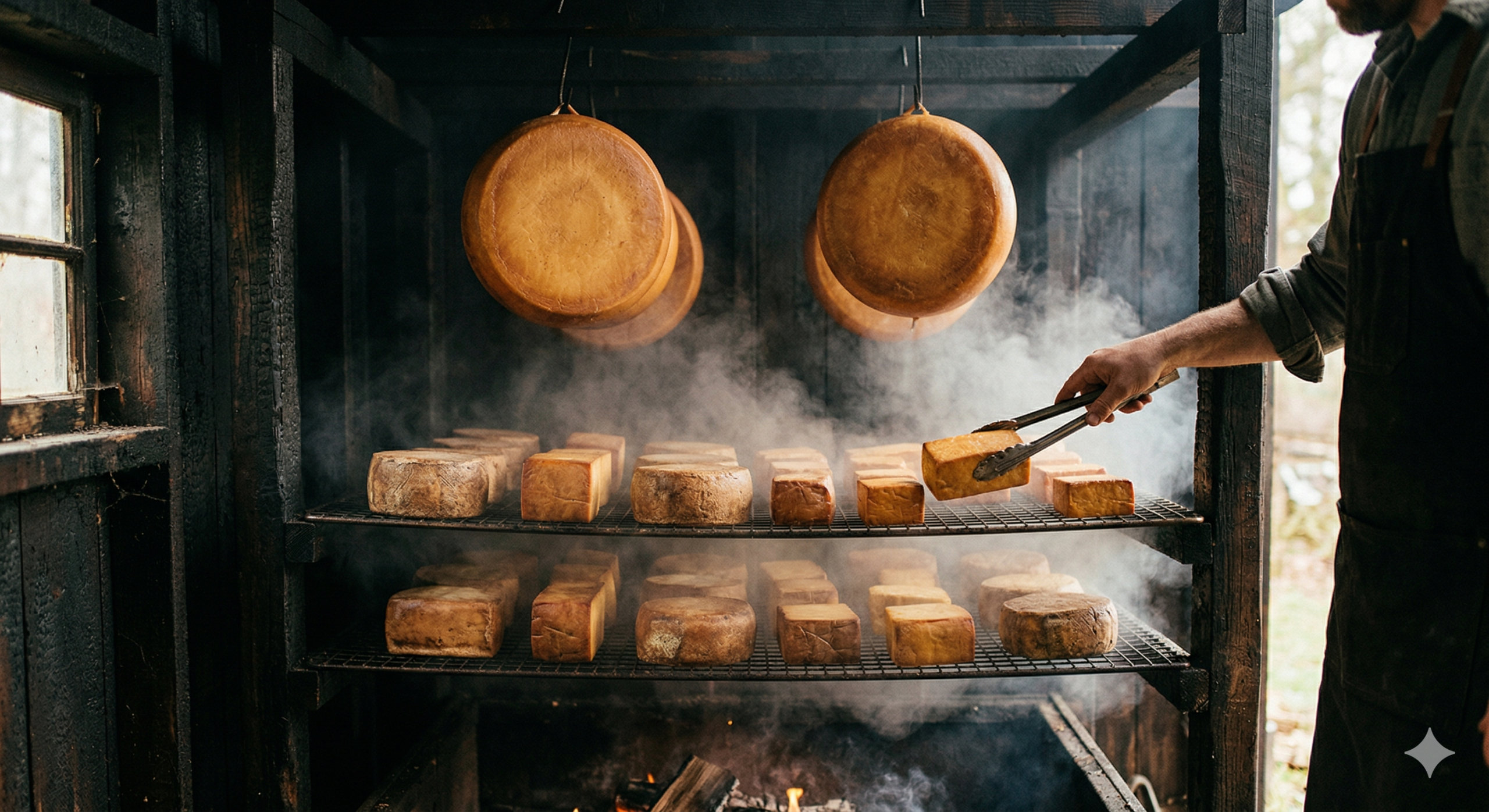
Learning how to smoke cheese opens the door to one of the most profitable value-added products in artisan dairy. A wheel of smoked Gouda or a block of smoked cheddar commands a significant premium over its unsmoked counterpart. The technique is accessible to producers at every scale, from farmers market vendors using simple setups to commercial operations with dedicated smoking chambers.
This guide covers both cold and hot smoking methods, wood selection, food safety, equipment options, and the business case for adding smoked cheese to your product line.
Cold Smoking vs. Hot Smoking: Understanding the Difference
The distinction between cold smoking and hot smoking is the single most important concept in cheese smoking. Getting this wrong can ruin your product — or create a food safety risk.
Cold Smoking
Cold smoking exposes cheese to smoke at temperatures below 32°C (90°F). At these temperatures, the cheese maintains its original texture and structure. The smoke deposits flavor compounds and aromatic molecules on the surface, which gradually penetrate inward over time.
Cold smoking is the preferred method for most cheeses. It preserves the body, elasticity, and melting properties that consumers expect. The process takes anywhere from 2 to 6 hours depending on the desired intensity, the cheese density, and the smoking setup.
The critical challenge is keeping the temperature low enough. Smoke is inherently warm, and even a small enclosed space can heat up quickly. Most cold smoking setups use an external smoke generator connected to the smoking chamber by a pipe or tube. This allows the smoke to cool during transit before reaching the cheese.
Hot Smoking
Hot smoking exposes cheese to temperatures above 52°C (126°F), and sometimes as high as 80°C (176°F). At these temperatures, the cheese surface begins to melt, creating a distinctive glazed appearance and a slightly cooked flavor.
Hot smoking is less common for cheese than for meats. Only firm, low-moisture cheeses can withstand the heat without completely losing their shape. Varieties like aged Gouda, provolone, and scamorza are suitable candidates. Soft cheeses, fresh cheeses, and high-moisture varieties will collapse under hot smoking conditions.
The smoking time for hot smoking is shorter — typically 30 minutes to 2 hours. The higher temperature drives smoke compounds deeper into the cheese more quickly.
Choosing Wood for Cheese Smoking
Wood selection directly determines the flavor profile of your smoked cheese. Each wood species produces different aromatic compounds when it combusts. Here is a guide to the most commonly used woods and their characteristics.
Mild Woods
Apple wood produces a light, sweet, and fruity smoke. It is the most popular choice for cheese smoking because it complements without overwhelming the cheese’s natural flavor. Cherry wood delivers a slightly sweeter and darker note. Both are excellent starting points for producers new to cheese smoking.
Medium Woods
Hickory provides a stronger, more robust flavor that works well with sharp cheddars and aged cheeses. Maple wood offers a subtle sweetness with mild smokiness. Pecan falls between hickory and fruit woods in intensity and pairs well with semi-hard varieties.
Strong Woods
Mesquite produces an intense, earthy smoke that can easily overpower delicate cheeses. Use it sparingly and only with strongly flavored, aged varieties. Oak delivers a medium-to-strong flavor that is versatile but requires careful timing to avoid bitterness.
Woods to Avoid
Never use softwoods such as pine, spruce, cedar, or fir. These contain high levels of resin and terpenes that produce acrid, unpleasant flavors and potentially harmful compounds. Also avoid treated, painted, or laminated wood of any species.
Always use kiln-dried or properly seasoned wood. Green (fresh) wood produces excessive creosote, which deposits a bitter, tar-like residue on the cheese surface.
Which Cheeses Smoke Best?
Not every cheese is a good candidate for smoking. The ideal cheese for smoking has firm texture, low-to-medium moisture, and a flavor profile that complements smoke rather than competing with it.
The best choices include cheddar (medium to sharp), Gouda (young or aged), mozzarella (low-moisture only), provolone, Colby, Jack, Swiss, and Gruyère.
Cheeses that are difficult to smoke include fresh mozzarella (too moist, melts easily), cream cheese (too soft for cold smoking), brie and camembert (the bloomy rind interferes with smoke absorption), and blue cheese (the strong flavors clash with smoke).
For the best results, start with cheese that has been aged at least 30 days. Fresh curds and very young cheeses tend to absorb smoke unevenly and may develop off-flavors. Let the cheese come to room temperature before smoking to prevent condensation from forming on the surface, which blocks smoke absorption.
Equipment and Setup
Cheese smoking equipment ranges from improvised backyard setups to commercial smoking chambers. The key requirements are consistent temperature control, adequate smoke flow, and the ability to maintain low temperatures for cold smoking.
Entry-Level Setup
A basic cold smoking setup can be built with a large cardboard box, metal mesh shelving, and a tube-style smoke generator. Tube smokers burn wood pellets slowly and produce cool smoke that can be piped into the box through a short length of flexible aluminum ducting. This setup costs under $50 and is suitable for farmers market quantities.
Mid-Level Setup
A dedicated smoker or converted refrigerator with an external cold smoke attachment offers better temperature control and consistency. Temperature and humidity monitoring with a digital probe ensures you stay below 32°C. This setup handles larger volumes and produces more uniform results.
Commercial Setup
Commercial smoking chambers with automated temperature control, humidity management, and programmable smoke cycles represent the highest level of investment. These are appropriate for producers who have established smoked cheese as a core product line and need high-volume, consistent output.
The Smoking Process Step by Step
Regardless of your equipment, the basic cold smoking process follows these steps.
Start by preparing the cheese. Remove it from refrigeration and let it reach room temperature (approximately 18–21°C / 65–70°F). This takes 1–2 hours depending on block size. Pat the surface dry with a clean cloth. Moisture on the surface will trap creosote and create bitter spots.
Next, prepare your smoke source. Load your smoke generator with your chosen wood and ignite it according to the manufacturer’s instructions. Allow the initial heavy smoke to clear for 5 minutes before introducing cheese. The first minutes of combustion produce harsher compounds that mellow as the burn stabilizes.
Place the cheese on wire racks in the smoking chamber, leaving at least 5 cm (2 inches) between blocks for air circulation. Smoke flows need to reach all surfaces evenly. Rotate the cheese halfway through the smoking period if your setup has uneven airflow.
Monitor the chamber temperature throughout the process. If it rises above 32°C, open vents or temporarily remove the smoke source. Temperature spikes are the most common cause of melted or sweaty cheese during smoking.
Smoke for 2 to 4 hours for a mild flavor, or 4 to 6 hours for a stronger smoke profile. Check the color periodically. A light golden-brown surface indicates good smoke deposition without over-smoking.
After smoking, remove the cheese and let it rest uncovered in the refrigerator for 24–48 hours. This rest period allows the surface smoke compounds to equilibrate and penetrate deeper into the cheese. Freshly smoked cheese often tastes harsh or acrid. After resting, the flavor mellows and integrates beautifully with the cheese’s natural profile.
Finally, vacuum seal the smoked cheese for storage or sale. Smoked cheese stored under vacuum refrigeration maintains its quality for 4–8 weeks, depending on the base cheese type and moisture content.
Food Safety Considerations
Smoking does not pasteurize cheese or eliminate pathogens. Cold smoking in particular operates at temperatures where bacterial growth is possible. Follow these food safety practices.
Ensure the cheese you smoke has already been made from pasteurized milk or has been aged for the FDA-mandated 60-day minimum for raw milk cheese. Keep the smoking environment clean and free from contaminants. Monitor temperature throughout the process to ensure it stays within safe ranges. Refrigerate smoked cheese promptly after the process and the 24–48 hour resting period.
Document your smoking parameters — time, temperature, wood type, batch identification — as part of your HACCP plan. Smoking is a processing step that introduces additional hazards and requires its own critical control point documentation. DairyCraftPro can help you maintain comprehensive batch records that include smoking parameters alongside your standard production data and HACCP documentation.
The Business Case for Smoked Cheese
Smoked cheese is one of the simplest ways to increase the value of your existing products. A block of cheddar that sells for $12 per pound can command $18–22 per pound when properly smoked and labeled as a specialty product.
The investment is minimal compared to the return. A basic cold smoking setup and a few pounds of wood pellets can transform commodity cheese into a premium artisan product. For producers already selling at farmers markets, specialty stores, or through direct-to-consumer channels, smoked varieties add diversity to your product line and attract new customers.
Conclusion
Learning how to smoke cheese is a practical and profitable skill for dairy producers at every scale. Whether you start with a simple cardboard box and tube smoker or invest in commercial equipment, the fundamentals remain the same: keep temperatures low, choose your wood carefully, let the cheese rest after smoking, and document everything.
Smoked cheese turns a standard product into a specialty item that stands out on shelves and at markets. With proper technique and consistent record-keeping through tools like DairyCraftPro, you can build a smoked cheese line that delights customers and strengthens your bottom line.